Advancing LLM Research
for Real-World Impact
Exploring brain-inspired memory, multi-agent systems, retrieval-augmented generation, reasoning, and recursive self-improvement in large language models
Research Focus
My research explores the frontiers of large language models with a focus on brain-inspired memory, multi-agent collaboration, knowledge retrieval, reasoning, and systems that improve themselves over time.

Recursive Self-Improvement
A long-horizon direction: agents that turn their own experience into lasting capability — reflecting on past trajectories, revising their own strategies and tools, and compounding those revisions under verification. Early-stage and deliberately open-ended.
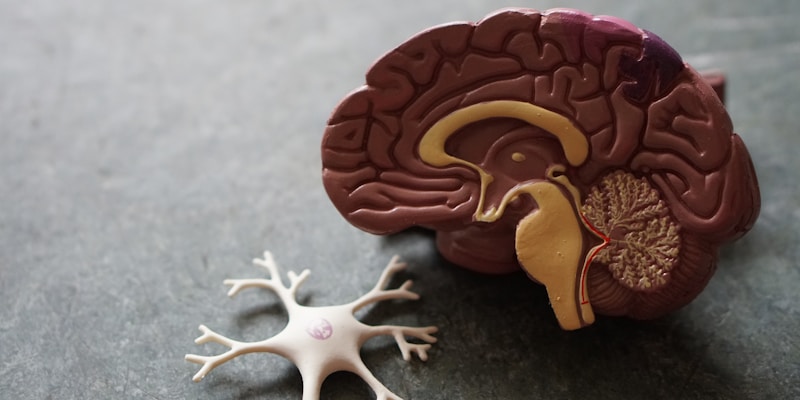
Brain-Inspired Memory
The BMAM framework draws on neuroscience principles (hippocampus, prefrontal cortex, temporal lobe) to build multi-agent memory systems with consolidation, forgetting, and retrieval mechanisms.
Multi-Agent Systems
Developing frameworks for multiple AI agents to collaborate through specialization and coordination. Research on XAgent evaluation and inter-agent communication protocols.
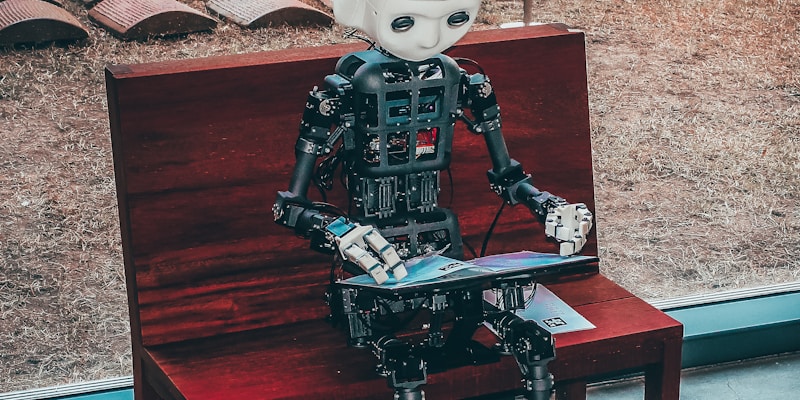
Retrieval-Augmented Generation
Enhancing LLMs by retrieving and utilizing external knowledge. Work on the ReproAgent project improves retrieval precision, context integration, and query formulation.

Reasoning in LLMs
CondAmbigQA benchmark (EMNLP 2025) demonstrates that condition reasoning improves LLM accuracy by up to 18.9%, reframing apparent hallucinations as query ambiguity.

Domain-Specific LLMs
Building Pain LLM for pain analysis and assessment with multi-node distributed training on 20+ NVIDIA H100 GPUs. Developing pain mouse behavioral benchmarks under the China Brain Project.

Code Generation
Contributed to CodeGeeX (KDD 2023), a pre-trained model for multilingual code generation benchmarked on HumanEval-X with improvements through data analysis and prompt engineering.

神枢Shenshu
A research route toward building AI agents with genuine memory, personality, and self-awareness — grounded in the BMAM framework and inspired by the Artificial Fluctlight vision.
星轨Star Trail
Research worldlines diverging across memory, reasoning, and agents — converging toward Artificial Super Intelligence.
Selected Publications
Peer-reviewed publications at ACL, EMNLP, and KDD, with further work under review at AAAI and in preparation for ICLR.
- 2× EMNLP (Main)
- 1× ACL (Findings)
- 1× KDD
- 1× Journal (JTCMS)
- 2× AAAI submissions
- On LLM memory and agent self-evolution — titles withheld until decisions are out
- 1× ICLR submission
- Currently in preparation
AURA: Intent-Directed Probing for Implicit-Need Surfacing in Situated LLM Agents
Y. Li, J. Liu, J. Cai, and M. Xu. arXiv:2606.05557
BMAM: Brain-inspired Multi-Agent Memory Framework
Y. Li, J. Liu, Y. Wang, Y. Wu, and M. Xu. Findings of ACL 2026. arXiv:2601.20465
CondAmbigQA: A Benchmark and Dataset for Conditional Ambiguous Question Answering
Z. Li*, Y. Li*, H. Xie, and S. J. Qin. pp. 2269-2288. *Equal contribution
CodeGeeX: A Pre-Trained Model for Code Generation with Multilingual Benchmarking on HumanEval-X
Q. Zheng, X. Xia, X. Zou, Y. Dong, S. Wang, Y. Xue, Z. Wang, L. Shen, A. Wang, Y. Li, T. Su, Z. Yang, and J. Tang
Machine Learning Models for Stroke Detection by Observing Eye-Movement Features Under Five-Color Visual Stimuli in TCM
Q. Lu, J. Deng, Y. Yu, Y. Li, K. Wei, et al. Journal of Traditional Chinese Medical Sciences, 10(3), pp. 321-330
Interested in Collaboration?
As a PhD student at PolyU, I'm looking for research internships and open to collaborations with labs, academic institutions, and industry partners on LLM memory, brain-inspired AI, and self-evolving agent systems.